


A recent viral post claimed that an AI coding tool recreated a distributed agent orchestration system in under an hour — something a large engineering team had previously spent months building. The reaction was immediate: excitement, fear, skepticism, and a familiar question resurfaced once again.
If AI can build complex systems this fast, what’s left for human teams to do? The answer is simpler — and more important — than the headline suggests. AI can build systems quickly, but most organisations still fail to deploy them successfully. Understanding this gap is the key to extracting real business value from AI.
What the Viral Claim Gets Right
Modern AI tools excel at generating code when problems are well understood. Given clear requirements, familiar architectural patterns, and known technologies, AI can replicate common system designs, generate boilerplate, and assemble working prototypes with remarkable speed.
This makes AI an extraordinary accelerator. Tasks that once required weeks of manual development can now be compressed into hours or days. For teams that already know what they need, this represents a genuine productivity breakthrough — but it only addresses the first fraction of the work.
Prototype Speed Is Not Production Readiness
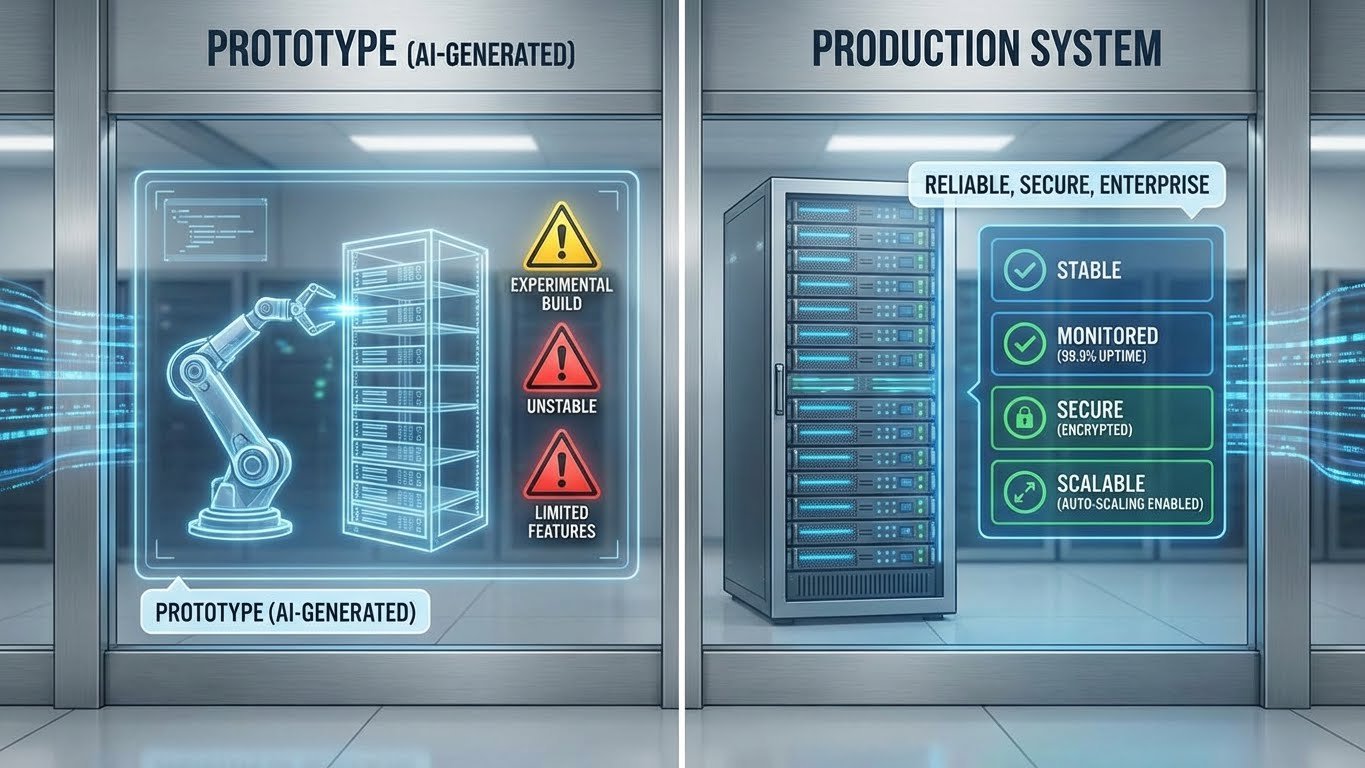 What AI produces quickly is usually a prototype, not a production-grade system. This distinction matters. Functional code alone does not equal a system that can be trusted, scaled, or maintained in real-world conditions.
- Monitoring and observability
- Error handling and recovery
- Security and access control
- Cost governance and usage limits
- Compliance and auditability
- Human-in-the-loop decision points
The Hidden Work Nobody Tweets About
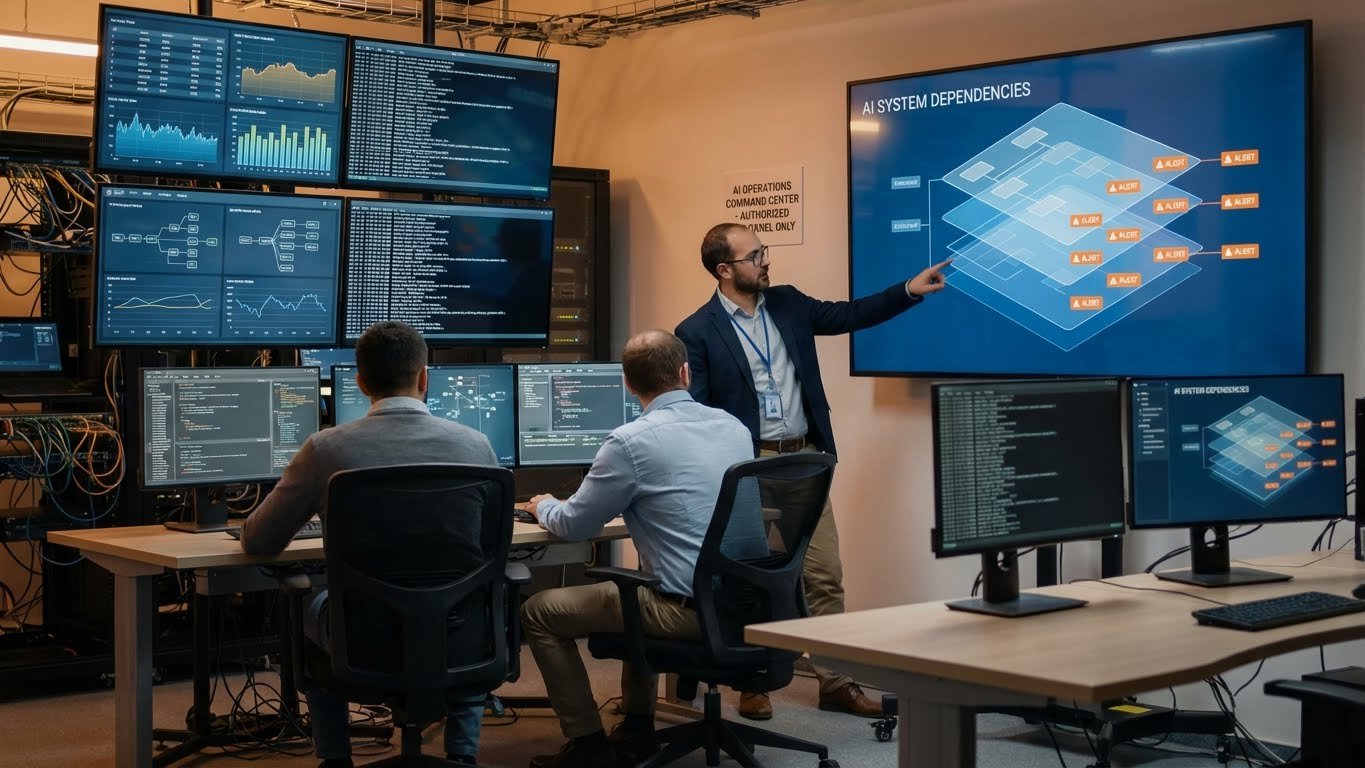 Most AI projects don’t fail because the model is weak. They fail because the surrounding system is fragile. Integration, ownership, governance, and reliability are where real complexity lives.
- Poor integration with existing tools and databases
- AI agents acting without sufficient constraints
- Unclear accountability when systems behave unpredictably
- Escalating costs due to unmonitored usage
- Lack of trust in automated decisions
AI’s Real Superpower: Compression, Not Replacement
 The most effective organisations are not using AI to replace engineers — they are using it to compress timelines. AI accelerates exploration, reduces repetitive implementation work, and speeds up iteration.
Humans remain essential for defining the right problems, making architectural trade-offs, designing failure modes, and ensuring systems align with business goals. AI changes how fast we build — not what it means to build responsibly.
Where AI Automation Services Create Real Value
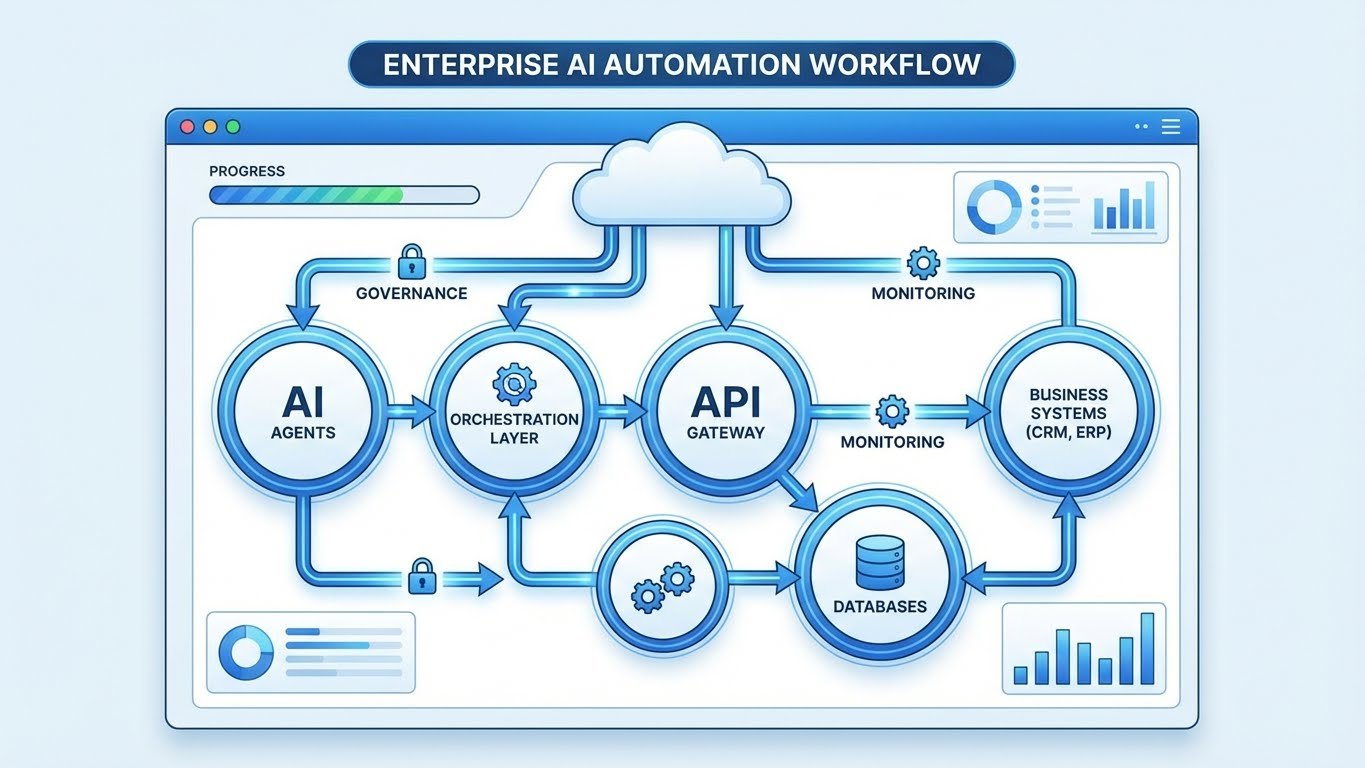 The true value of AI automation services lies in turning raw AI capabilities into reliable, end-to-end business workflows. This includes orchestration layers, monitoring, human oversight, and governance.
- Designing AI agent orchestration systems
- Connecting models to real data sources and APIs
- Implementing fallback and escalation logic
- Ensuring compliance and cost control
From Demo to Durable Advantage
AI can now get organisations to a demo faster than ever before. But demos do not generate trust, resilience, or long-term advantage. Durable systems require thoughtful design, governance, and continuous improvement.
Final Thoughts
AI has removed speed as the primary bottleneck. Execution, integration, and reliability are now the true differentiators. The real question is no longer whether a system can be built — but whether it can be trusted, scaled, and sustained over time.
That is where real transformation happens.


