

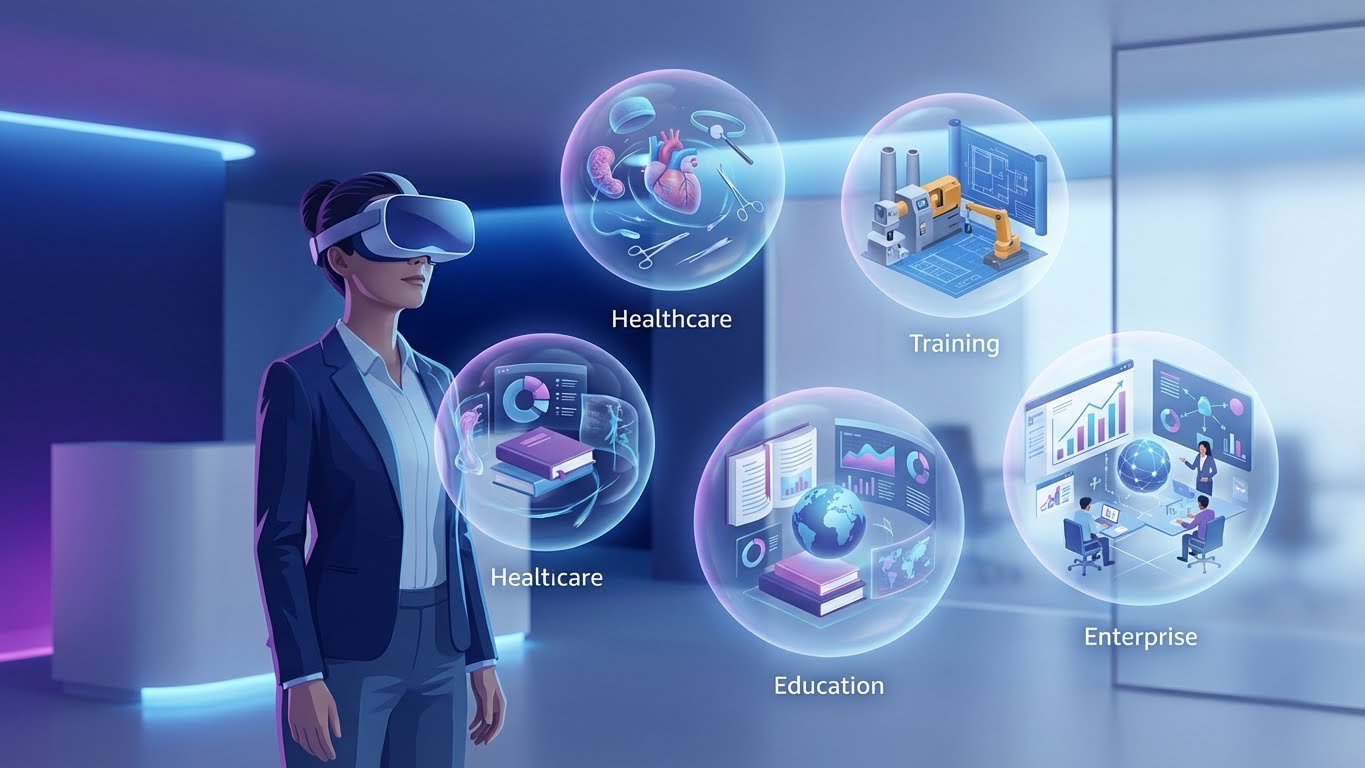
Virtual Reality (VR) is often associated with gaming and entertainment, but that perception no longer reflects how VR is being used today. Modern VR development is transforming industries such as healthcare, training, education, and enterprise operations—delivering real-world value far beyond games.
As hardware becomes more accessible and software more advanced, VR is emerging as a serious tool for solving practical problems. This article explores how VR development is being applied beyond gaming and what it takes to build VR systems that truly matter.
VR in Healthcare and Therapy
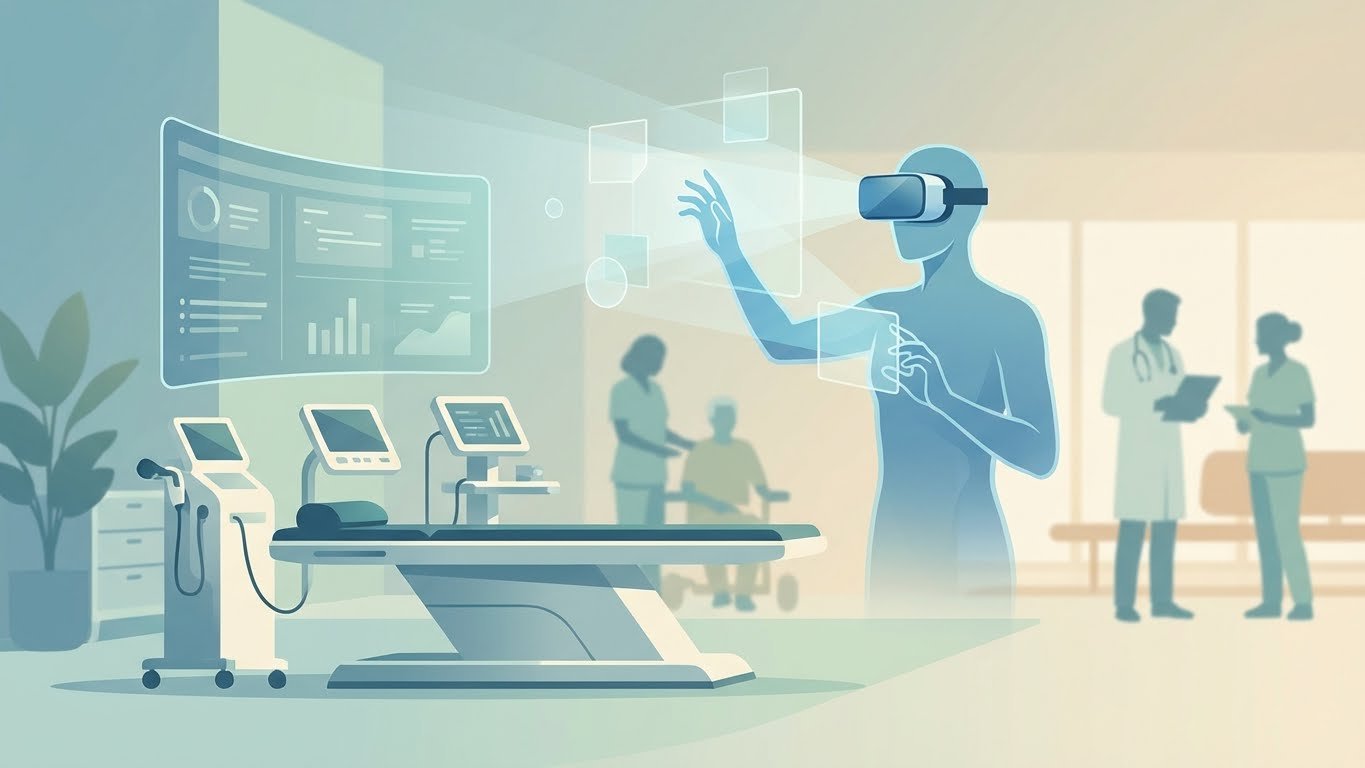 One of the most impactful uses of VR development is in healthcare and rehabilitation. VR therapy applications are increasingly used to support stroke recovery, pain management, mental health treatment, and physical rehabilitation.
VR mirror therapy, for example, allows patients to retrain motor functions through immersive visual feedback. Unlike traditional therapy, VR environments can be personalized, repeatable, and engaging—leading to better patient outcomes and adherence.
VR for Training and Simulation
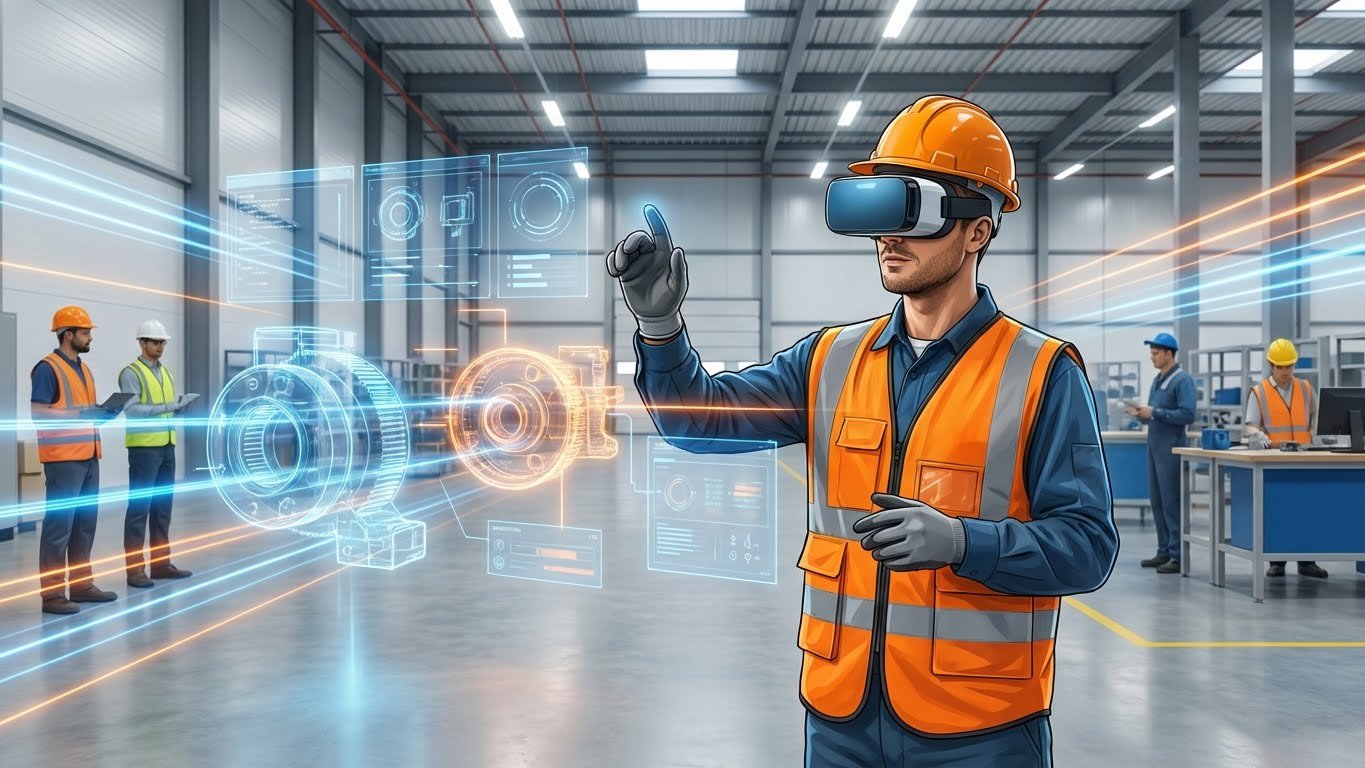 VR development has become a powerful training tool in industries where errors are costly or dangerous. Sectors such as manufacturing, healthcare, aviation, and construction use VR simulations to train employees in realistic, risk-free environments.
VR training improves engagement, knowledge retention, and safety while reducing long-term training costs. For many organizations, VR is now a productivity and risk-reduction investment—not a novelty.
Enterprise and Industrial VR Applications
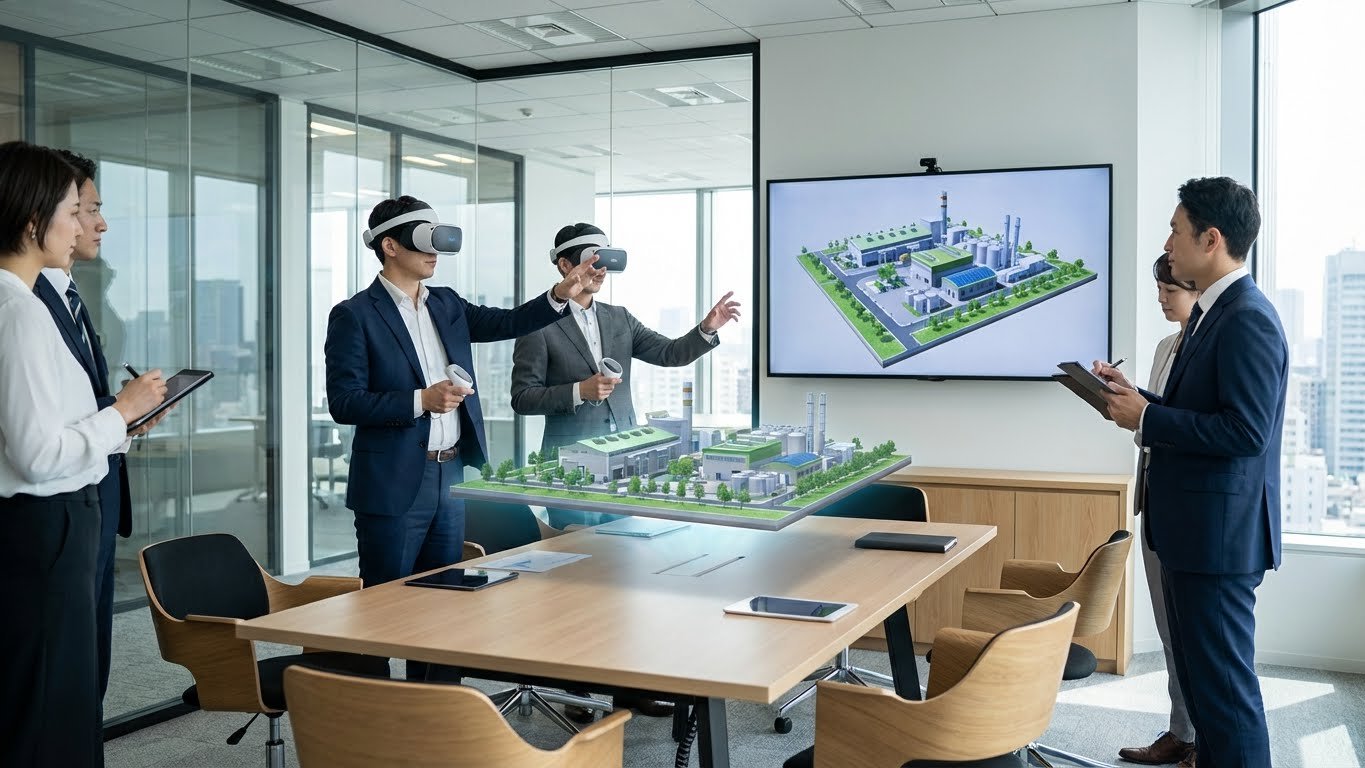 Beyond training, VR is increasingly used in enterprise workflows. Companies adopt VR for product design, prototyping, facility walkthroughs, remote collaboration, and visualization of complex environments or data.
In architecture, engineering, and manufacturing, VR allows teams to identify design issues early, reducing costly changes later. These applications require VR systems that integrate seamlessly with existing enterprise tools.
VR in Education and Research
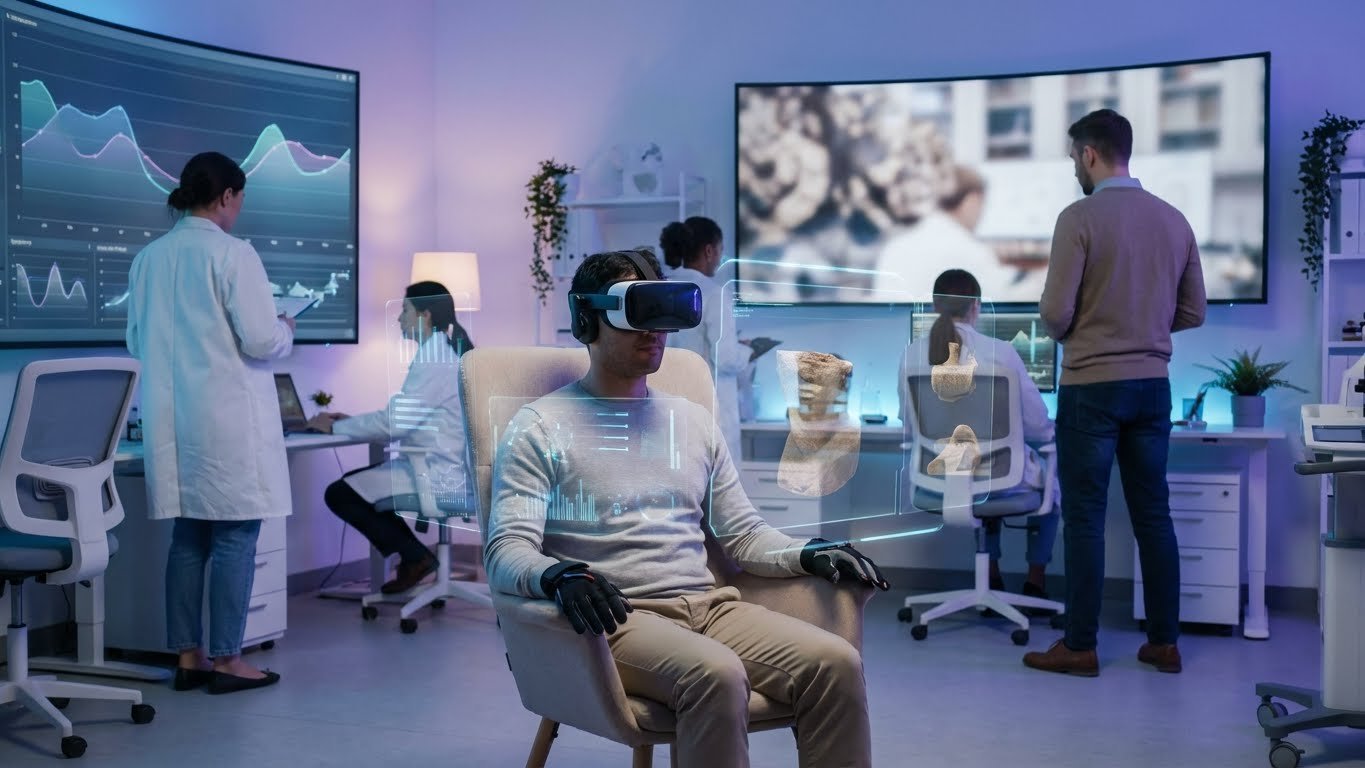 Education is another area where VR development is delivering measurable impact. From virtual laboratories to historical simulations, VR enables experiential learning that improves understanding and engagement.
In research environments, VR is also used for behavioral studies, data visualization, and controlled simulations, offering capabilities that traditional tools cannot match.
Why Many VR Projects Fail Outside Gaming
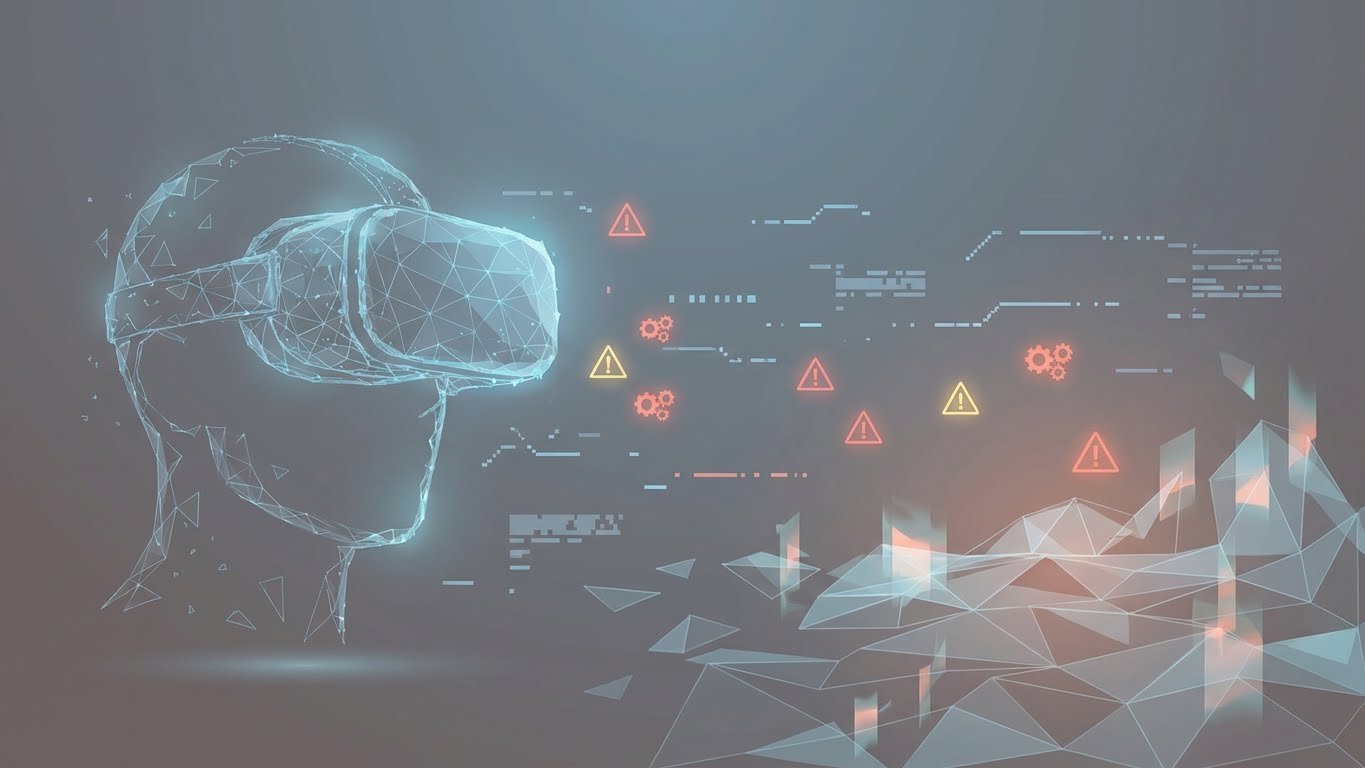 Despite its potential, many VR projects fail to move beyond prototypes. Common reasons include poor performance optimization, lack of user-focused design, hardware compatibility issues, and no long-term support strategy.
Real-world VR applications must be treated as production systems—not experiments. Reliability, performance, and maintainability are critical for success.
How NexusDevStudio Builds Real-World VR Solutions
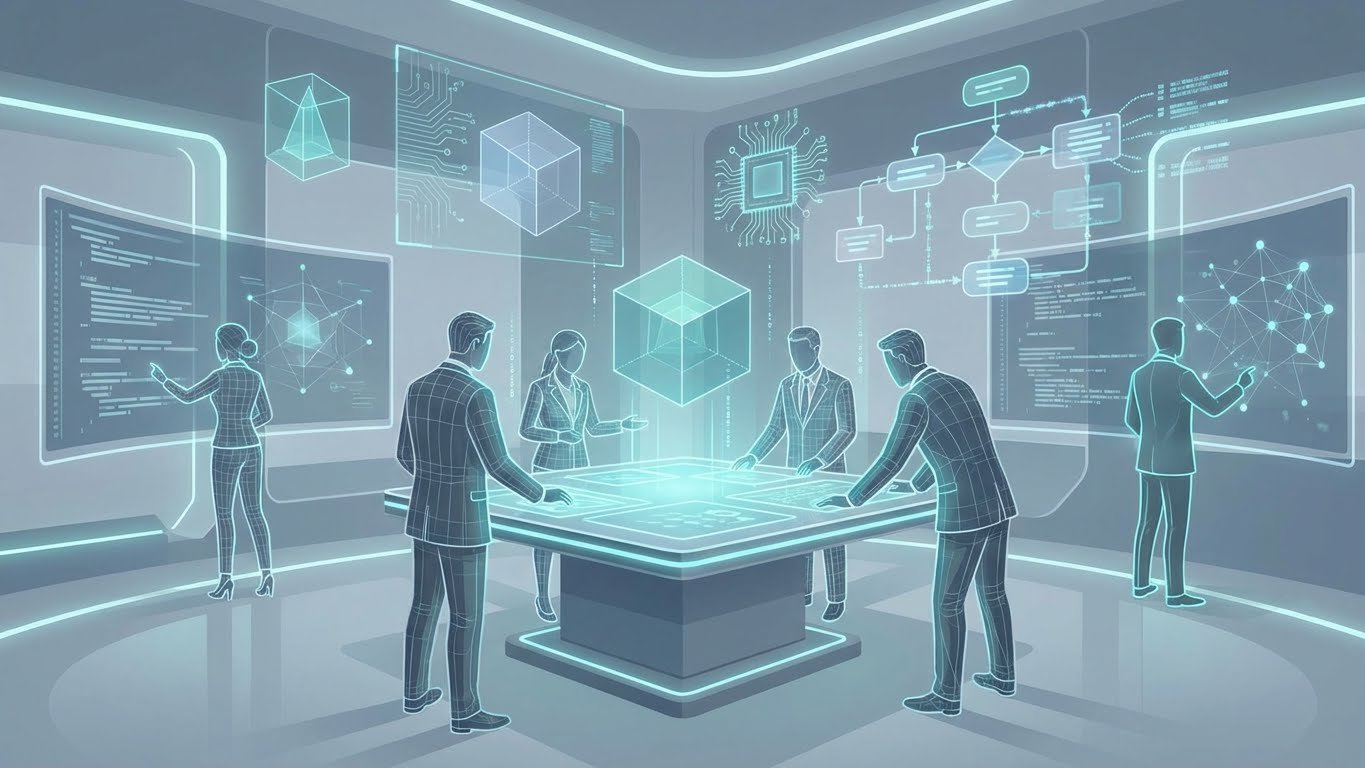 At NexusDevStudio, we specialize in VR development beyond gaming. We build production-ready VR applications for healthcare, training, enterprise, and education—focused on stability, performance, and long-term value.
Our VR Development services include custom VR application development, enterprise simulations, optimized 3D environments, and ongoing support.
Learn more about our VR services here:
Final Thoughts
VR development has evolved far beyond gaming. Today, it is a powerful tool for solving real-world challenges in healthcare, education, training, and enterprise environments.
When built with purpose and professional execution, VR delivers lasting impact—not just impressive visuals.


