


Enterprise evaluations guide some of the most critical decisions organizations make—from technology investments and system upgrades to AI adoption and scalability planning. Yet many of these evaluations fail to deliver accurate insight or lead to costly outcomes because they overlook one essential element: a proper code audit.
Without examining the actual codebase, evaluations rely on surface-level indicators such as dashboards, documentation, and tooling assumptions. This creates blind spots that hide real risk and undermine strategic decision-making.
What Is an Enterprise Evaluation?
 An enterprise evaluation typically assesses system performance, scalability, security posture, maintainability, integration readiness, and overall risk. These evaluations influence major initiatives such as cloud migrations, AI implementation, re-architecture projects, and vendor selection.
Many evaluations focus on infrastructure and process maturity while ignoring the layer that determines how everything actually works—the code itself.
The Missing Layer: Code-Level Reality
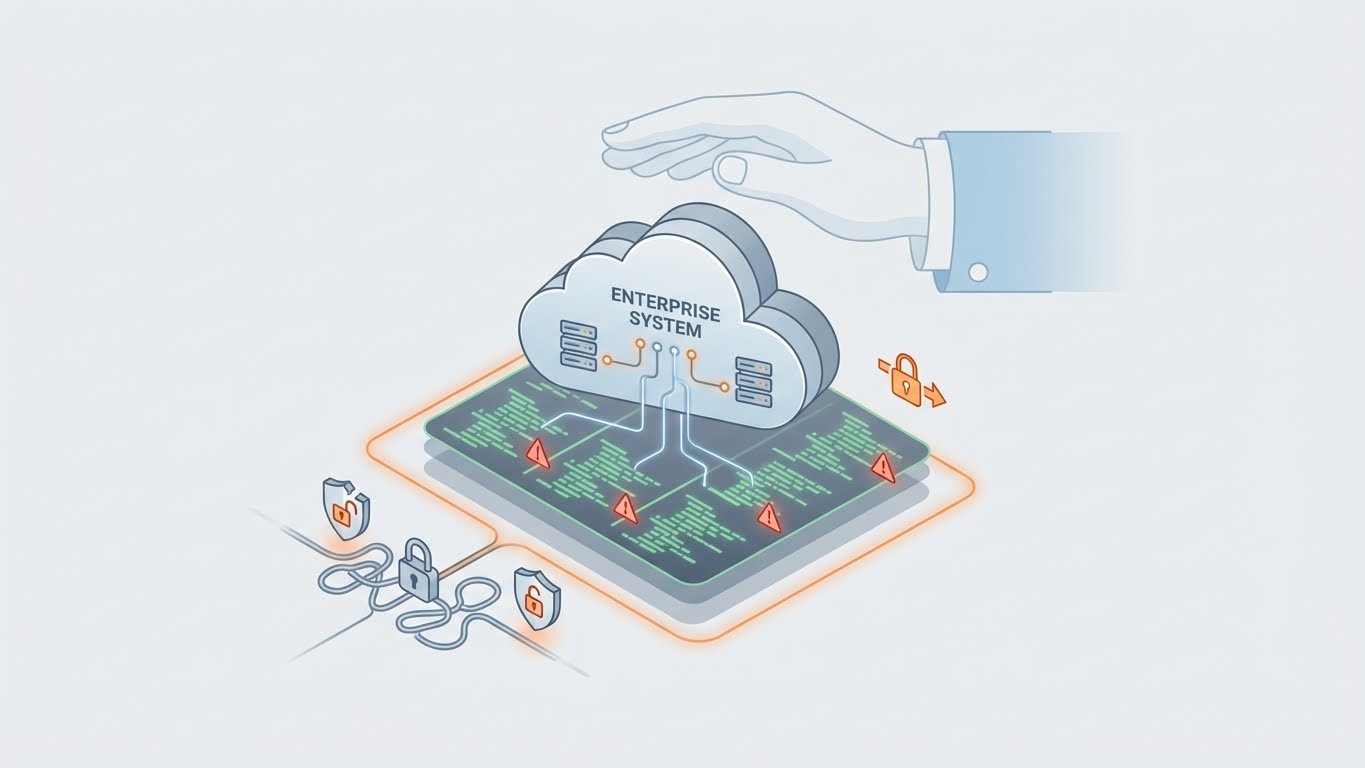 Code is where business logic, performance constraints, security vulnerabilities, and long-term risk live. Enterprise systems evolve quickly, often outpacing documentation and architectural diagrams.
Without a code audit, evaluations fail to uncover technical debt, hidden dependencies, performance bottlenecks, security flaws, and unreviewed AI- or automation-generated code.
Why Evaluations Fail Without Code Audits
- Overestimated System Health: Dashboards show uptime and response times, but hide poor architecture, duplicated logic, and scalability limitations.
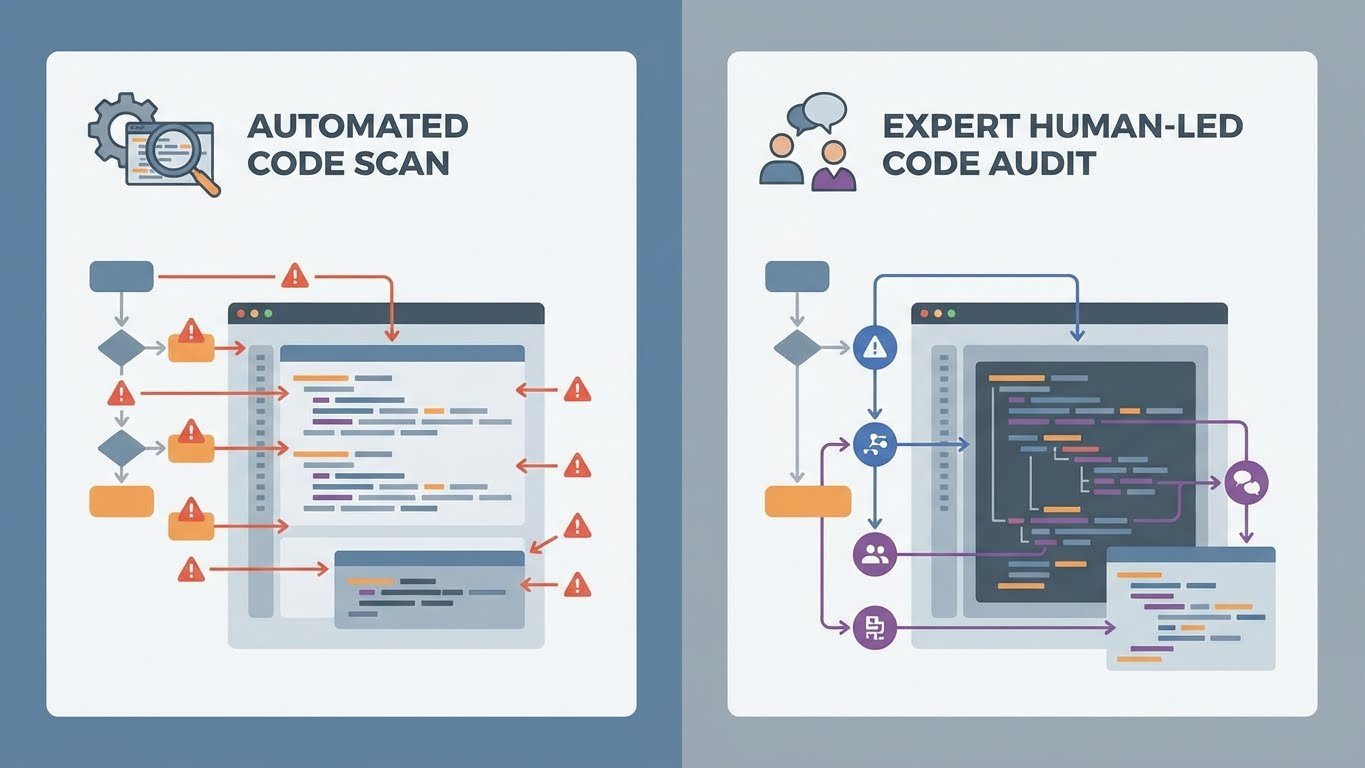
- Underestimated Risk: Automated scans miss security flaws in authentication, data handling, and API integrations that only expert code reviews uncover.
- Misjudged AI & Automation Readiness: Legacy code, inconsistent data flows, and unvalidated logic cause AI and automation initiatives to fail after deployment.
- Costly Strategic Decisions: Enterprises invest in new tools to fix issues caused by poor code quality, wasting budget on symptoms instead of root causes.
Why Automated Scans Are Not Enough
 Automated tools are useful for quick diagnostics, but they cannot replace expert-led code audits. They lack business context, architectural insight, and the ability to prioritize issues by real-world impact.
Enterprise evaluations require human judgment to interpret findings and align technical reality with strategic goals.
What a Code Audit Adds to Enterprise Evaluations
A professional code audit provides a realistic view of system health, highlights high-risk areas, and delivers prioritized, actionable recommendations.
How NexusDevStudio Supports Enterprise Code Audits
 At NexusDevStudio, we support enterprise evaluations with expert-led code audits that go beyond automated scans. We focus on clarity, prioritization, and long-term value.
Our Code Audit services cover code quality, security risks, performance constraints, AI readiness, and clear remediation guidance. Learn more about our Code Audit services here:
Final Thoughts
Enterprise evaluations fail when they ignore the code itself. Without a code audit, even the most detailed evaluation remains incomplete.
For organizations seeking resilience, scalability, and confident decision-making, code audits are not optional— they are foundational.


